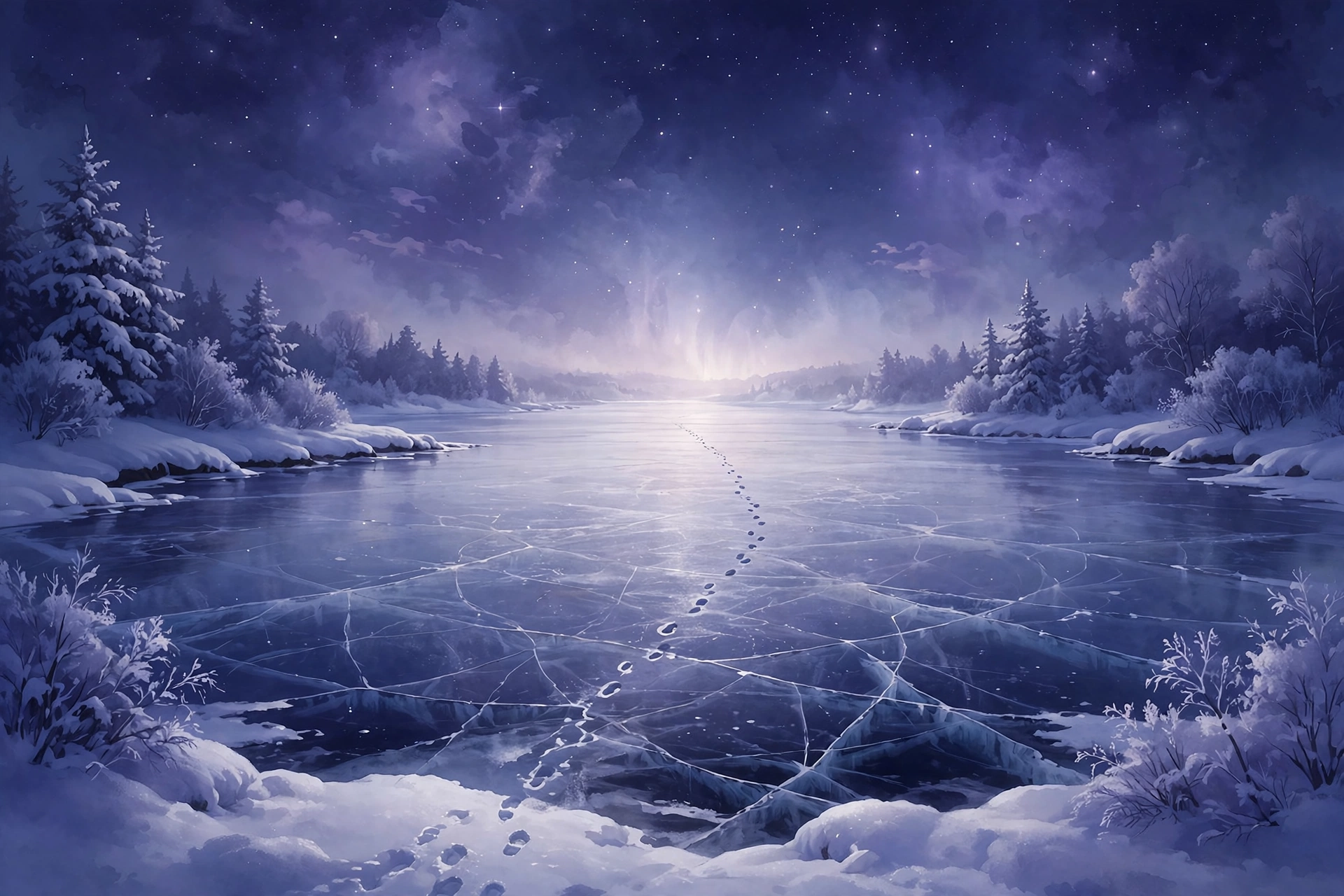
You are standing somewhere white and quiet, and you cannot quite remember how you got there. Snow covers the road. It covers the car. In some versions it covers a place you know well in summer, a yard or a street, and the familiar shape underneath is the only reason you recognize it at all.
Snow dreams split in two directions. Some wake up rested, the way you feel after real snow quiets a town overnight. Others wake up cold in a different sense. Lonely. A bit stuck. Both reactions live in the same symbol, which is why the feeling you carried through the dream matters more than the forecast.
Ice changes the dream again. Snow you can walk through. Ice decides whether you walk at all. A frozen lake, a slick sidewalk, a windshield you cannot clear. Each version asks what has stopped moving in your life, and what might start moving again.
The Short Answer
Snow and ice dreams usually describe a feeling that has gone still. That stillness can be a problem, numbness or a situation frozen in place, or a relief, a clean field with no footprints yet. Your job is to work out which kind of quiet your dream gave you.
Key Takeaways:
- Your feeling in the cold decides the reading: peace in fresh snow points toward rest and a fresh start. Dread on bare ice points toward feelings you have shut down or a situation you cannot grip.
- Snow covers, ice holds: snow hides what was there before and gives you a blank surface. Ice locks water in place. One is about covering over, the other is about being held still.
- Movement tells the story: walking easily, slipping, breaking through, or watching a thaw. What the ground lets you do in the dream usually matches what life lets you do right now.
- A thaw is a plot point: melting snow and cracking ice at the end of a dream often arrive when a frozen stretch in waking life has started to loosen, even a little.
Free: The 50 Most Common Dream Symbols Guide
Get the free guide when you join the DreamEvaluator mailing list.
Before you settle on a reading, fix two details: how deep was the snow, and what was the ice doing? Most snow dreams answer themselves once you have those two facts straight.
6 Common Meanings of Snow and Ice Dreams
1. Feelings that have gone numb
This is the cold reading, and it is common. You dream of a white field with no sound, or a room where the windows have frosted over from the inside. Nothing hurts in the dream. Nothing feels like much at all. That flatness is the message.
People get this version during long, grinding stretches: caregiving with no break, a job that went flat months ago, grief past the loud part. The mind reaches for winter because winter is how the body already feels. If you have also had paralyzed dreams, compare the two. Both are about a response that will not come when you call for it.
2. A clean slate and a quiet fresh start
Fresh snow with no tracks in it is one of the most hopeful images a dream can offer. The old ground is still there. You just cannot see the ruts and stains for a while, and that pause is the point.
This version often shows up after a decision, before life has caught up: you have quit, or been accepted, or ended the thing, and the new chapter has not filled in yet. The dream gives you the blank page before the writing starts. It sits close to calm water dreams, where the surface has settled and you can look at it clearly.
3. A situation frozen in place
A frozen lake is water that cannot do what water does. In a dream it tends to stand for a part of life stuck mid-process: an application with no answer, a house sale hanging, a conversation that stopped in October and never resumed.
Notice what sits under the ice, if anything does. Fish, a car, a path across. Dreamers often see the thing they want through the surface and still cannot reach it. That frustration, close and visible and unreachable, is usually the waking situation too. Name the one process that has not moved in months.
4. A need for rest you keep postponing
Farms rest fields. Bears sleep through winter. Snow in a dream can be your system asking for the same arrangement, especially if the dream felt kind. You watch snow fall from a warm room. Nobody needs anything from you.
Adults who run on fumes get this dream and misread it as sadness. Check the texture first. Sad snow is gray and heavy, and you are out in it without a coat. Rest snow is bright, you are sheltered, and the quiet feels earned. If yours was the second kind, take the pause before your body takes it for you.
5. Slippery ground and a risk you can feel coming
Ice underfoot is a warning dream with good manners. It rarely shouts. You take smaller steps. You grab at a railing that may not be there. A car slides a few feet past where you told it to stop.
This version clusters around money decisions made too fast, new relationships where you have not found your footing, and workplaces after a reorganization, when nobody knows which floor is solid. The dream is practical. Slow down and test the next step before you put your weight on it. It shares ground with storm dreams in one way: both ask how much control you have over the conditions.
6. A thaw, and feelings coming back online
Melting is the ending people remember. Snow slides off a roof in the sun. Ice cracks on a puddle. Water starts to move again under a bridge, brown and fast. Dreamers wake from thaw dreams a little wrung out, often in a good way.
A thaw usually follows movement in waking life: the first honest talk after a silent month, a project unstuck, numbness lifting after grief. A thaw can hand you over to rain dreams or even tidal wave dreams if a lot of feeling comes back at once. Most people get the slow melt, which is easier to live with.
Common Variations (And What Changes the Meaning)
Walking on thin ice
You can hear it. Small ticks and cracks under each step, and you keep going because stopping feels worse. This is the dream of a known risk you live with: a debt you service, a secret you manage, a job on a short contract. The ice holding is part of the dream too. So far, it has held.
Caught in a snowstorm or blizzard
A blizzard is snow with the volume turned up and the visibility gone. You move by memory and hope. Blizzard dreams belong to overloaded weeks, when too much arrives at once and you lose sight of the plan. They differ from drowning dreams in texture. Drowning is too much feeling. A blizzard is too many demands landing at once.
Slipping and falling on ice
The fall is usually quick and embarrassing rather than terrifying. You go down in front of people. That public quality matters. Slipping dreams often trail a fear of being seen getting it wrong, at work or in a new role, where you suspect everyone else has better grip.
Ice melting or spring arriving
Green at the edges. Drips off the eaves. This is the thaw in close-up. Pay attention to what the melt uncovers. A path, a garden, a car. What reappears tends to be the thing you are ready to deal with again.
What to Ask Yourself After a Snow or Ice Dream
- Were you warm or cold? Your comfort in the dream is the fastest sorting tool you have. Comfortable cold usually means rest or a fresh start. Cold that hurts means shutdown or loneliness.
- Could you move? Walking, driving, skating, stuck fast. Your freedom of movement in the dream tends to copy how free you feel in the situation the dream is about.
- What was frozen? A lake, a road, a house, your own hands. The frozen object narrows the search. Water points at feelings. A road points at plans. Hands point at work you cannot seem to start.
- Was anyone else there? Snow dreams are often solo, which fits both numbness and rest. If someone specific stood with you on the ice, that relationship is part of the reading, for better or worse.
- Did anything melt? An ending with thaw or running water suggests the frozen stretch is loosening. An ending still deep in winter suggests patience, or a talk you still need to have.
Write the dream down before the details blur, especially the temperature and whether you could move. Those two facts carry most of the meaning.
Frequently Asked Questions
Does dreaming of snow mean something bad is coming?
No. Snow dreams describe your current inner weather. A peaceful snow dream after a hard decision is usually a good sign. A bleak one points at feelings or plans that have stalled, which is information, not a prediction.
What does it mean to slip on ice in a dream?
Slipping usually points at footing: a situation where you do not fully trust your grip, or a moment where you fear being seen getting it wrong. Ask where you have been taking careful little steps in waking life. That place is the ice.
What if the snow was beautiful and I felt happy?
Then start with the kind readings. Fresh snow, chosen cold, and play all point toward rest, relief, and room to begin again. Not every winter dream is a warning. Some are the only quiet a busy person gets.
Why do I keep dreaming about being frozen or stuck on ice?
Recurring frozen dreams usually mean the underlying situation has not moved: the same stalled process, the same unsaid thing. Track what changes between dreams. Thinner ice or any melt at all tends to track real movement, even slow movement.
Get Your Free Dream Decoder
Want the full picture? Grab the free 50 Dream Symbols Guide, it comes free when you join the mailing list. The guide puts snow and ice alongside the other water and weather symbols, so you can compare a frozen lake with calm water, rain, and a storm.
Get the free guide when you join the DreamEvaluator mailing list.
Prefer to listen? Dream Case Files, our podcast, gives real member dreams the full treatment every week: https://open.spotify.com/show/5TWggSlCTBsRYGsnpLJDDy
Dream interpretation is for self-reflection and entertainment, not medical or psychological advice.
Leave a Reply