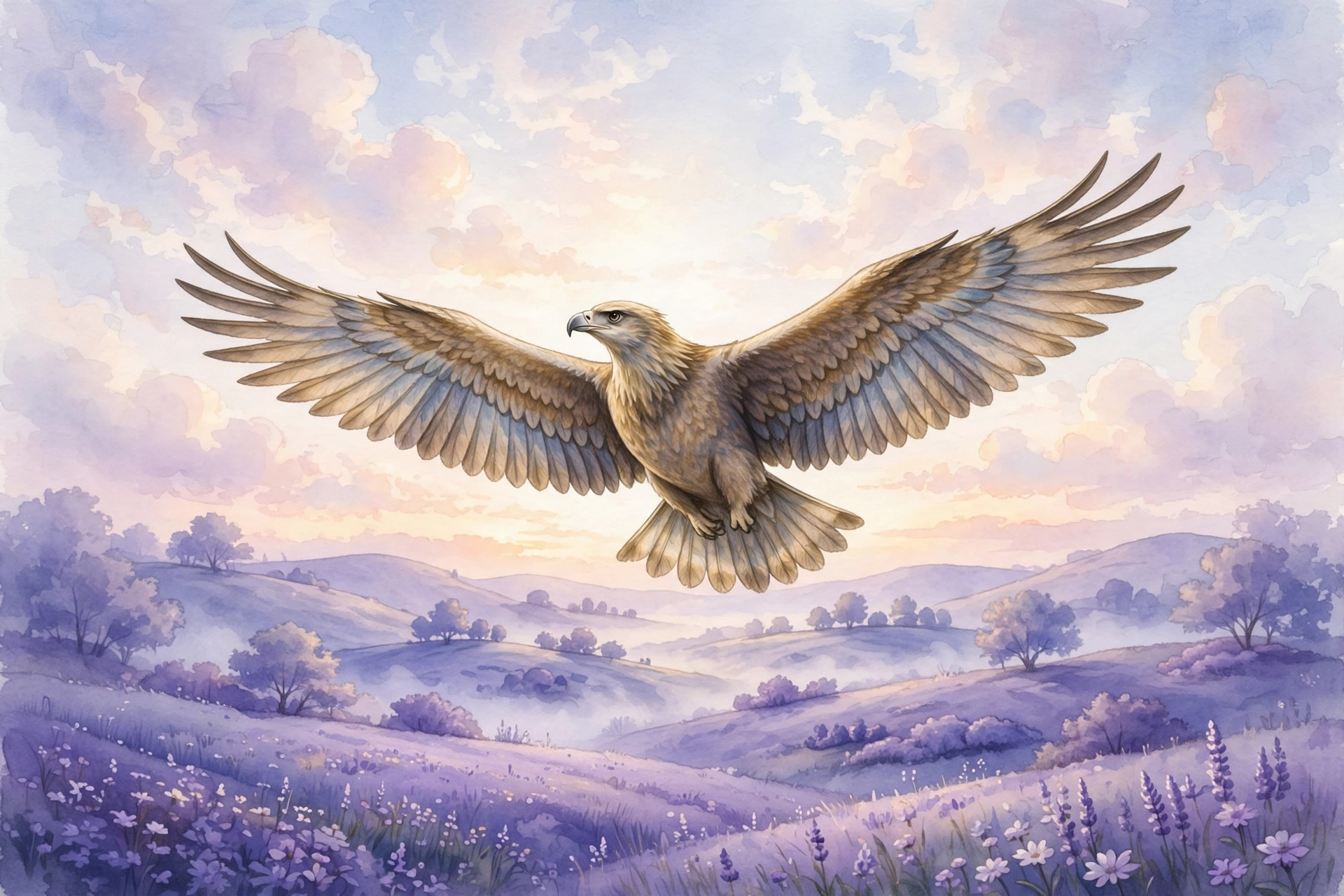
Birds cross the sky above your house, hundreds of them, all heading the same way. Or one bird sits on your windowsill and watches you through the glass. Or a bird is trapped in a room, flying at the walls, and you are the only one who can let it out.
People wake from bird dreams with a feeling before they have a story. Light, usually. Sometimes urgent. The bird rarely stays still long enough to be examined, which is part of the point.
Start with one question. Was the bird free, or was it not? Almost every reading below hangs on that answer.
The Short Answer
A bird in a dream usually points to freedom, hope, or a wider view of something that has felt close and stuck. A bird in open flight tends to show a part of your life loosening up, or a wish to be out from under something. A caged, injured, or trapped bird tends to show the opposite: a plan, a relationship, or a part of you that cannot move the way it wants to.
At a Glance
- Flying birds point to freedom that feels possible: a bird climbing into open sky usually reflects hope, relief, or a problem getting smaller.
- Caged or hurt birds point to something held back: a bird that cannot fly often matches a plan or a feeling with no room to move.
- A flock points to belonging: many birds moving together usually track community, family, or a group you want to be part of.
- One bird at a window points to a message you half know: a single bird that watches or taps at glass often stands for news, or a thought that keeps returning.
Free: The 50 Most Common Dream Symbols Guide
Get the free guide when you join the DreamEvaluator mailing list.
6 Common Meanings of Bird Dreams
1. Freedom, and a life that feels too fenced in
This is the reading most bird dreams start from. A bird rises off a field, clears a roof, and keeps going. You watch it and feel something in your chest lift with it. Dreams like that often show up in fenced in seasons of life: a job with no say in it, a routine that repeats to the hour, caring duties that leave no hour unclaimed.
On the evidence: no study isolates bird dreams, but the frame is documented: flight is among the most reported themes in the Typical Dreams Questionnaire data, and dreamers describe flight in the language of freedom and release across every culture surveyed. The bird borrows that flight. The feeling underneath it is as close to universal as dream feelings get.
2. A wider view of a problem you are too close to
From the ground, a problem fills the whole view. From the air, it has edges. A bird that circles high above a place you know, or a dream where you watch a familiar street from a bird’s height, often arrives when you have been inside a worry for weeks and lost sight of its size.
This reading fits when the dream felt calm rather than exciting. You were not fleeing. You were looking. People often report this version just before a decision gets easier, as if the mind needed one quiet pass over the whole map.
On the evidence: this is a perspective reading from clinical dreamwork: the bird’s eye view as the mind asking for distance. No research grades it. It survives because the question it asks, what does this look like from above, is one dreamers genuinely use.
3. Hope after a flat or heavy stretch
Birds return in spring in most of the stories humans tell, and dreams borrow that timing. A bird singing outside a window, the first bird in an empty sky, or a bird building a nest often shows up near the end of a grey period, when something in you has started to expect better again.
On the evidence: hope is not a measurable dream variable, and this page will not pretend otherwise. Uplifting dreams arriving after hard stretches are a consistent self-report, and dream diary research finds dream mood often runs against the day’s weather rather than simply copying it. Interpretation, labeled.
4. Something held back that wants room
A caged bird, a bird with a clipped or broken wing, or a bird trapped in a house turns the symbol around. Now it stands for whatever in your life has wings and no sky. A plan you keep postponing. A talent that gets used only for other people. A conversation that would change things if you ever had it.
Your role in the dream matters here. If you tried to free the bird, you already know roughly what to do and the dream is asking why you have not. Compare it with a cat dream if you have had both. Cats ask whether you trust your instincts. A caged bird asks whether you are giving them anywhere to go.
On the evidence: the caged or held bird is a staple of Jungian dreamwork, where a confined animal stands for a confined instinct. That tradition is a lens with no controlled evidence behind it. The trapped bird variation below is where this reading does its real work.
5. Belonging, and your place in the group
A flock moving as one body, turning together over a field, is one of the oldest sights in nature, and dreams use it for the group question. Where do you belong? Who moves when you move? Flock dreams often arrive around team changes, family events, moves to a new town, or the slow drift of old friends out of weekly reach.
Notice your position. Inside the flock, keeping up easily, the reading is warm. Struggling at the back, or watching the flock leave without you, points to a belonging worry you may not have said out loud yet.
On the evidence: the flock as social mirror is this page’s inference from dreamer reports: flock dreams arrive during belonging questions, moves, new jobs, falling out with a group. A reported pattern, honestly labeled.
6. News, or a thought that keeps coming back
Birds have carried messages in human stories for a very long time, from doves to ravens to the bird that arrives at a window in a fairy tale. A dream bird that taps at glass, lands close and stares, or seems to be trying to get your attention often stands for a piece of news, or a thought of your own that you keep putting off.
Ask what you have been half expecting to hear. A result. A reply. Word from someone far away.
On the evidence: birds as messengers is among the oldest pieces of dream folklore in existence, and the modern version, a thought that keeps returning, is how clinical dreamwork hears it now. Neither version is a finding. The folklore is documented further down this page, as folklore.
Common Variations (And What Changes the Meaning)
A black bird: crow, raven, or blackbird
Color changes the temperature of this dream. A black bird carries the shadow side of the family: mystery, the unknown, news you are not sure you want. But the raven in Norse tradition was a thinker, Odin’s two ravens were Thought and Memory, so read the bird’s behavior before its color. A calm black bird and an attacking one are different dreams.
A white bird
A white bird reads as the family’s clean end: peace, a truce, a message you can trust, the dove’s long shadow. When the white bird is injured or trapped, dreamers tend to read it as something pure in their life being neglected, which is usually the more useful question to sit with.
A bird trapped in your house
This is one of the most common bird dreams there is, and one of the most frantic. A bird gets in, cannot find the way out, and flies at windows while you try doors and chase it with a towel. Read it as a feeling with no exit yet. Grief, restlessness, and news you do not know what to do with all take this shape.
A dead or injured bird
A bird found dead, or one that falls from the sky, usually marks a hope that has ended or a plan that lost its lift. It is a sad dream more often than a frightening one.
A bird attacking you
Birds are small, so a dream attack by one is about persistence rather than power. Pecking, swooping, a bird that will not leave your head alone: these tend to track a nagging worry, a criticism that keeps landing, or guilt that returns in small doses all day.
An owl
Owls break the hopeful pattern and bring their own. An owl in a dream usually points to something seen clearly at last, often at night, often alone. Wisdom is the word most people reach for, and it fits when the owl simply watched and the dream felt still.
A dove, an eagle, or a brightly coloured bird
Specific birds bend the general reading. A dove leans toward peace, reconciliation, or a wish for a truce in a household argument. An eagle leans toward ambition and height, the view from the top of a career or a long effort.
Baby birds or a nest with eggs
Nests shift the dream toward beginnings that cannot be rushed. Eggs and unfledged chicks are plans at the stage where they need warmth and quiet, not an audience.
Birds in Older Traditions
No symbol comes with older paperwork than the bird. Whole professions once existed to read them.
Augury: Rome read the sky
Roman officials took the auspices before battles, marriages, and laws: trained readers watched bird flight, calls, and feeding, and reported whether the gods approved. It is the direct ancestor of every bird omen since, including the unease a strange bird in a dream can still produce.
Noah’s dove
The bird sent out in Genesis comes back carrying an olive leaf: the original bird as messenger, bringing proof that the world is survivable again. The dove’s peace meaning in dreams descends from that flight, not from the bird’s temperament.
The owl’s double reputation
The owl was Athena’s companion and an emblem of wisdom in Greece, and a death omen in Roman and later European folklore. Same bird, opposite readings, sometimes in the same century. It is the cleanest proof on this page that a symbol’s meaning is set by the culture, and the dreamer, before any dictionary gets a vote.
What to Ask Yourself After a Bird Dream
- Was the bird free? Answer that first. Freedom or captivity sorts most bird dreams in one move.
- How high was it, and how did the height feel? Exhilarating points to freedom. Calm points to perspective. Dizzy or frightening points to a change that feels too big, too fast.
- Was I the bird, watching the bird, or helping it? Each role changes the reading. Helping dreams are usually about care you owe somewhere.
- Where in my life do I feel fenced in? Be specific. Name the fence before you reach for a grand meaning.
- What news am I waiting for, or avoiding? If a bird tapped, watched, or kept returning, start with the reply you check your phone for.
Go deeper
Go deeper
Go deeper
Go deeper
Frequently Asked Questions
Is dreaming about birds a good sign?
Most of the time, yes. Birds in open flight, singing birds, and flocks moving together tend to reflect hope, freedom, and belonging, and people usually wake from them lighter. A caged, trapped, or dead bird is less pleasant, but it is not a warning of bad luck. It points at the place where something in your life needs room, care, or an honest ending.
What does a bird in the house mean in a dream?
Usually a feeling or a piece of news that has got inside your private life and cannot settle. The bird wants out. You want it out, or safe, or both.
What does it mean when a bird lands on you?
A bird choosing you tends to be a trusting dream. It often shows up when an opportunity, a person, or a piece of good news arrives without you chasing it. If the bird felt heavy or you wanted it off, read it as a responsibility that landed on you uninvited. Your reaction in the dream is the most reliable guide, and that rule holds across animal dreams, from dog dreams to spider dreams.
Why do I dream about the same bird over and over?
Repeat birds usually mean the underlying situation has not moved. The same caged bird month after month is a plan still waiting for room. The same bird at the same window is a message still not acted on.
Get Your Free Dream Decoder
Want the full picture? Grab the free 50 Dream Symbols Guide. It comes free when you join the mailing list. Birds sit in the animal section alongside cats, dogs, snakes, and spiders, so you can compare why your mind sent something with wings that night instead of something that walks.
Get the free guide when you join the DreamEvaluator mailing list.
Prefer to listen? Dream Case Files, our podcast, gives real member dreams the full treatment every week: https://open.spotify.com/show/5TWggSlCTBsRYGsnpLJDDy
Dream interpretation is for self-reflection and entertainment, not medical or psychological advice.
Leave a Reply