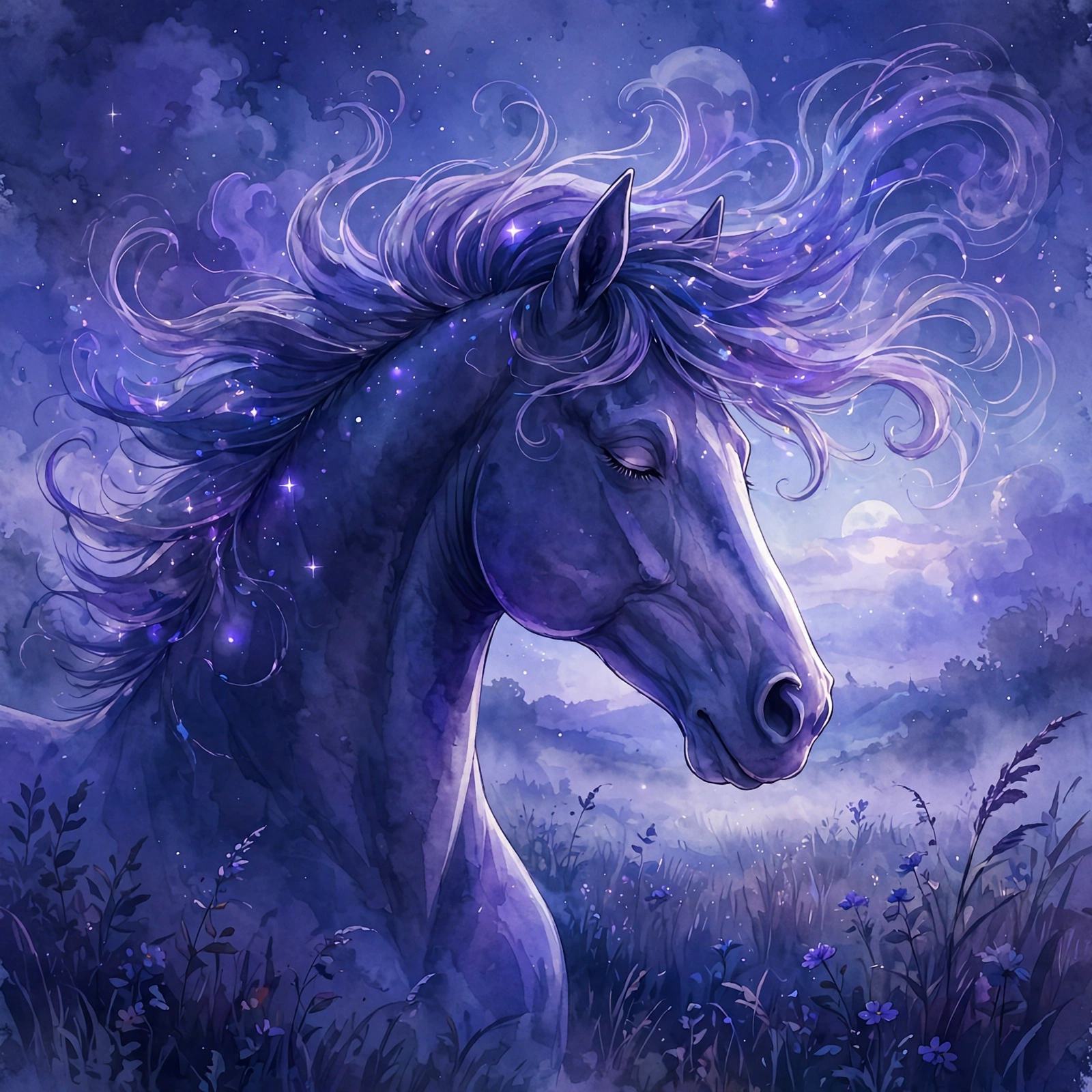
You are holding reins that are suddenly slack, or tight enough to hurt your hands. Or you are standing in a field while a horse runs past, close enough to feel the ground move. Horse dreams tend to stay with people because the animal is big, fast, and clearly has a mind of its own. So do you, in the dream. That tension is usually the point.
Start with the plain check. A horse dream does not predict success or failure. What it usually tracks is drive: the energy that carries you through a project or a family load, and how much say you feel you have in where that energy goes. One timely note: 2026 is a Fire Horse year in the Chinese calendar, running from February 17, 2026 to February 5, 2027, so horses are on calendars and in the news more than usual. A recent image can seed a dream without adding a deeper meaning.
The Short Answer
A horse dream usually points at drive and control, not luck. Riding calmly often marks energy you are directing well. A horse that bolts, kicks, or will not be caught points at a pace or a pressure that feels bigger than your grip on it. The color, the setting, and whether you are on the horse or watching it change the reading more than the horse alone does.
At a Glance
- Horse dreams are usually about drive and who holds the reins. They do not predict success, failure, or a windfall.
- Riding calmly often marks energy you are directing well. A bolting or wild horse points at a pace that feels out of hand.
- Falling off tracks a loss of grip on something you were managing, not a verdict on your ability.
- White and black horses shade the mood. A sick or dying horse points at drive that is running low and needs rest.
Free: The 50 Most Common Dream Symbols Guide
Get the free guide when you join the DreamEvaluator mailing list.
6 Horse Dream Interpretations
1. Drive you are directing well
When you ride at a steady pace and the horse answers small cues, the dream is often a simple status report. Something in waking life takes real effort, and right now you feel equal to it. The horse is not doing the work for you. You are working together, which feels different from being carried and different from being dragged.
On the evidence: this reading follows the continuity idea in dream research, linked to G. William Domhoff, that dreams tend to mirror waking concerns and activities rather than hide a fixed code. A calm ride matching a period of felt competence fits that pattern. It is an interpretation from dreamer reports and clinical practice, not a finding from a controlled study of horse dreams.
2. A pace that has got ahead of you
A bolting horse changes the whole dream. Your hands are busy, the ground is moving too fast, and stopping feels risky. People often report this version during weeks when a deadline, a debt, a move, or a family demand sets the speed and they are just trying to stay on. The fear in the dream is rarely about the horse. It is about what happens if you let go, and what happens if you do not.
On the evidence: threat and loss of control are common dream themes in the Typical Dreams Questionnaire work by Antonio Zadra and Tore Nielsen, where being chased and falling rank high. No direct study isolates runaway horses, so this reading comes from dream dictionary tradition and repeated dreamer reports, applied with care rather than treated as proof.
Compare this with our out of control car dream meaning guide. The vehicle version asks the same question with a steering wheel instead of reins.
3. Freedom you want, watched from the fence
Sometimes you never touch the horse at all. It runs in an open field while you watch. Dreamers often describe admiration mixed with ache in this version, especially when waking life feels fenced in by routine or other people’s schedules. The horse stands for a less managed version of your own energy.
On the evidence: Carl Jung treated animals in dreams as images of instinctive life that the conscious mind has partly set aside. That is a named theory, not a measurement, and modern dream research does not confirm a single animal code.
4. Falling off and losing your grip
Falling off a horse is abrupt. One moment you had a seat and a plan, the next you are on the ground watching the horse go on without you. Dreamers link this version to a role they slipped out of: a project handed to someone else, a routine that broke, a confidence knock at work. The embarrassment often outweighs the pain, which points at pride and standing, not just safety.
On the evidence: falling is one of the most reported typical dream themes across surveys, including the work summarized by Nielsen and Zadra in 2003. The specific link to a lost role comes from clinical practice and dreamer reports. There is no study that ties falling from a horse to one life event, so treat the connection as a question to test against your own week, not an answer.
Our falling in dreams article covers the drop itself when there is no animal involved.
5. A horse that kicks, bites, or will not be caught
An uncooperative horse brings the conflict closer. You reach for the halter and it steps away. This version often shows up when effort keeps meeting resistance: a body that will not recover on your timeline, or a plan that looks tame on paper and fights you in practice. Pushing harder is not working in the dream, and it may not be working outside it either.
On the evidence: no published study backs a single meaning for a kicking or biting horse. The reading comes from dreamer reports and from the plain logic of the scene, where a large animal refuses handling.
6. Drive that is tired, sick, or dying
A thin horse, a horse that cannot get up, or a horse that dies in the dream tends to leave a heavy mood behind. Dreamers often connect it to exhaustion that has stopped feeling temporary, or to real grief. The dream does not diagnose anything. It registers that something strong looks depleted.
On the evidence: Calvin Hall’s content analysis tradition found that dream imagery tracks emotional tone and waking preoccupations across large sets of reports. A depleted animal matching a depleted period fits that broad pattern. There is no direct research on dying horses in dreams, and this reading should never be used as a health claim about you or anyone else.
Animal dreams often cluster. Our dog dream meaning, cat dream meaning, bear dream meaning, and lion dream meaning guides cover the other animals people report most.
Common Variations
Riding calmly on a road or trail
The settled version. Direction is clear and the pace is yours. It tends to arrive when a big effort feels organized, even if it is still hard work.
A wild or runaway horse
Speed without steering. Look first at whatever in your week sets its own pace. The question is not how to stop it cold. It is where a slower gear could honestly fit.
Falling off, then getting back on
The second half changes the first. A fall followed by remounting reads less like failure and more like a setback you expect to recover from. A fall where the horse vanishes leans the other way, toward a role or routine that may not come back in the same form.
A white horse
In dream dictionary tradition, a white horse often carries a clean, hopeful tone: a fresh start, a clear conscience, a goal you feel good about chasing. Treat the color as mood shading, not a promise. If the white horse is calm, the dream usually feels clean too.
A black horse
A black horse tends to bring the unknown with it: strong drive you do not fully understand, or a change approaching from outside your plans. In folklore it can look ominous, but in dreamer reports the feeling is more often awe than dread. Your feeling in the dream outranks the folklore.
A sick, injured, or dead horse
Handle this one gently. It often pairs with tiredness, grief, or worry about someone strong who is not doing well. It does not predict a death.
Traditions and folklore, after the psychology
In Greek myth horses pull the chariot of the sun. In Norse tradition, Odin rides an eight legged horse between worlds. In Chinese tradition, the horse stands for speed and stamina. These are folklore and faith traditions, shared as cultural background, never as findings about your dream.
What to Ask Yourself
- Who held the reins in the dream, you, someone else, or no one?
- What in your current week sets the pace, and is that pace yours?
- Did the horse feel like help, like freedom, or like a problem to manage?
- If the horse was tired or hurt, what in your life has been running without rest?
- What would slowing down by one gear actually look like this week?
If you drive in dreams as often as you ride, our driving dream meaning article makes a useful comparison. The symbol changes, the control question stays.
Frequently Asked Questions
What does it mean to dream about riding a horse?
It usually points at how you are directing your own energy. A calm, responsive ride tends to match a period when a big effort feels manageable. A rough or frightening ride points at pace and control instead, not at riding itself.
Is a horse dream a good sign?
It can feel like one, especially a calm ride or a healthy horse in open country. But it works better as a status report on drive and control than as a sign about the future.
What does a white horse mean in a dream?
In dream dictionary tradition, a white horse often marks a hopeful feeling about a goal or a fresh start. Read it as mood shading on the main theme of drive.
Why did I dream about a horse dying?
Dreamers most often link this version to exhaustion, grief, or worry about something strong that looks depleted. It does not predict a death, yours or anyone else’s. If it returns often, look at rest and load first.
Want the Full Picture?
Want the full picture? Grab the free 50 Dream Symbols Guide, it comes free when you join the mailing list.
Prefer to listen? Dream Case Files, our podcast, gives real member dreams the full treatment every week: https://open.spotify.com/show/5TWggSlCTBsRYGsnpLJDDy
Leave a Reply