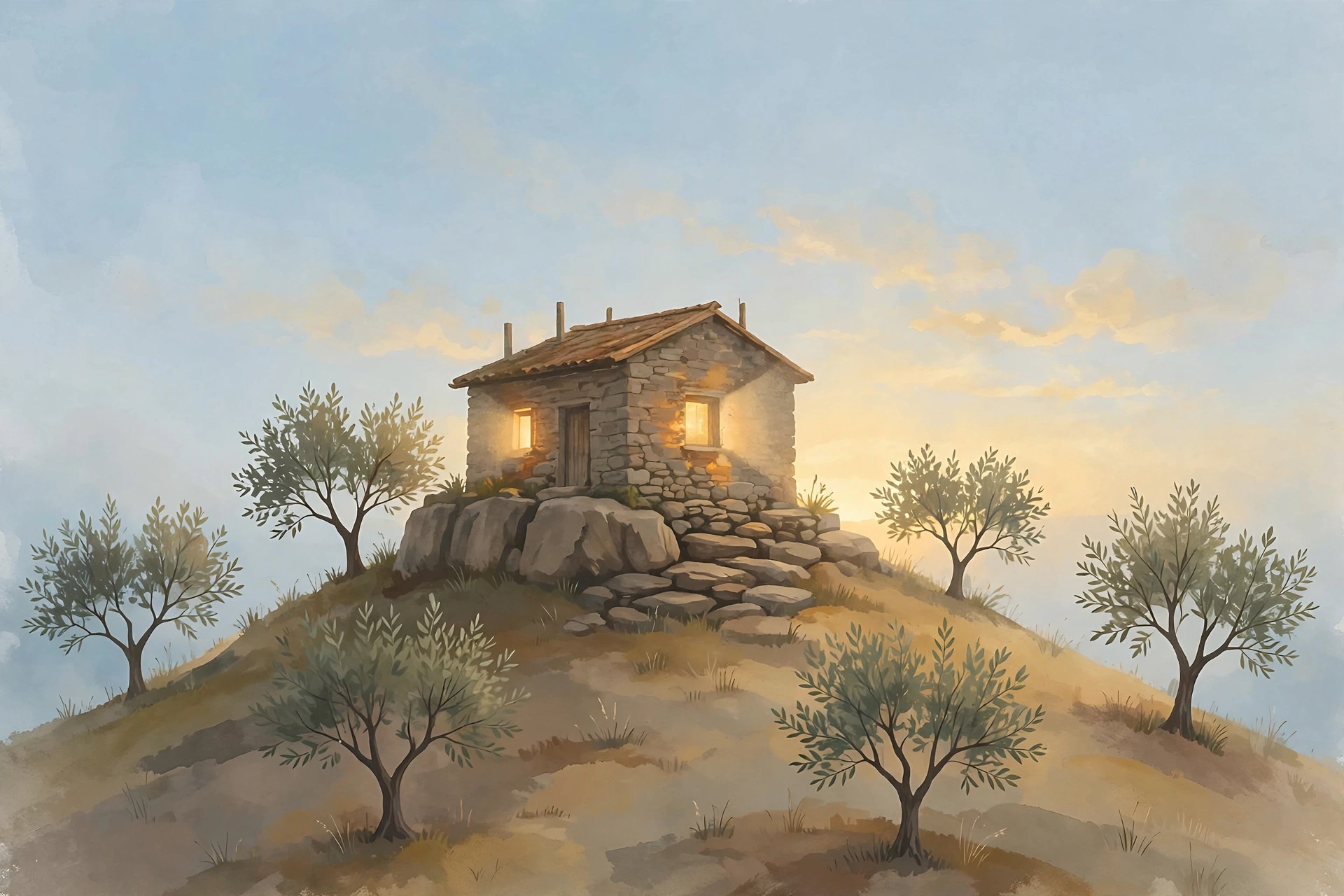
Biblical Meaning of a House in a Dream
- In both psychology and Scripture, a house in a dream usually represents the self: your inner life, your family, or the structure of your current existence.
- The Bible uses houses as images of foundation and wisdom: the house built on rock (Matthew 7:24-27), the house wisdom builds (Proverbs 24:3), and the body as God’s temple (1 Corinthians 6:19).
- The condition of the house matters most. A sturdy house, a crumbling one, an unfamiliar one, and a childhood home each point to different inner states.
- As with any dream, treat these readings as invitations to reflect, not predictions. The meaning lives in your life, not in the symbol alone.
House dreams are just one symbol. There are 49 more.
Get The 50 Most Common Dream Symbols, our free quick-reference guide that decodes every symbol in this dictionary in plain English.
Real dreams, fully interpreted: A house under judgment is the whole stage in Dream Case Files #5, where masquerades stop at the door and the husband negotiates in the doorway.
Real dreams, fully interpreted: For a house dream where trouble walks through the door of the best house on the street, see Dream Case Files #8: The Mansion Arrests, a real member dream read symbol by symbol.
House dreams are just one symbol. There are 49 more.
On this page
House dreams feel personal in a way few other dreams do. You’re walking through rooms you know, or rooms you should know but don’t, opening doors, finding spaces you forgot existed. You wake up with the floor plan still in your head.
There’s a reason for that intimacy. In dream symbolism, the house is you. Psychologists have said it for a century, and the Bible, in its own way, says it too.
What your mind may be doing
The standard psychological reading is straightforward: the house represents the self, and its rooms represent parts of your life or personality. The basement holds what’s buried or foundational. The attic stores old memories. The kitchen is about nourishment and daily sustenance. Bedrooms touch intimacy and rest. This isn’t a rigid code, but it’s a useful starting map.
The house’s condition usually mirrors your sense of your own life. A well-kept house during a stable period. A house falling apart during overwhelm. A house under renovation during deliberate personal change. The dreaming mind is a literalist with architecture: it shows you the state of the structure.
Unfamiliar rooms are the most interesting detail. Dreaming of discovering a new room in a familiar house often coincides with discovering something new about yourself: a talent, a desire, a capacity you hadn’t recognized. The house is bigger than you thought. So are you.
Scripture picks up this same intuition, the house as the self, and builds whole teachings on it.
The foundation: rock or sand
Jesus ends the Sermon on the Mount with a construction parable (Matthew 7:24-27). Two builders, two houses, one storm. The wise builder digs deep and sets his house on rock. The foolish one builds on sand. When the rain falls and the winds beat against both houses, one stands and one collapses. The difference was never visible from the street. It was always underground.
As a dream image, the foundation question is the first one to ask. Is your dream-house sturdy or crumbling? In the dream, do you trust the floors? A house with a cracked foundation, sinking walls, or rooms caving in often reflects a waking sense that something structural needs attention: a relationship, a belief system, a way of life that isn’t holding.
The parable’s honesty is worth noting: both houses face the same storm. The difference isn’t trouble or no trouble. It’s what the trouble reveals. If your house dream came during a hard season, the dream may be less about the storm and more about an invitation to check what’s underneath.
Psalm 127:1 frames it as a partnership: “Unless the Lord builds the house, the builders labor in vain.” Proverbs 24:3 adds the method: “By wisdom a house is built, and through understanding it is established.” In the biblical imagination, a sound house is a co-production: human wisdom plus something beyond it.
Rooms, condition, and familiar houses
The specifics of the house shape the reading:
- Your childhood home. The most common house dream. It usually points to formative patterns: family dynamics, old roles, the person you were before you became who you are. If the dream feels warm, it may reflect longing for simpler security. If it feels oppressive, it may mark patterns you’re still working to outgrow.
- A house under construction or renovation. Generally hopeful. Something in you is being rebuilt, deliberately. It can reflect therapy, new habits, spiritual growth, or any intentional renovation of the self. Messy mid-construction is normal. That’s what renovation looks like.
- A decaying or damaged house. Often mirrors neglect, not of property but of self: health ignored, relationships untended, inner life postponed. The dream tends to arrive when the postponement has gone on long enough to notice. It’s a maintenance reminder, not a condemnation.
- An unfamiliar or endless house. Corridors that go on, doors that open onto more doors. This often reflects a life or a self that feels bigger than your current map: new opportunities, unexplored potential, or simply the sense that there’s more to you than your routine reveals.
- A house with intruders or broken locks. Usually about boundaries: privacy violated, trust broken, or the feeling that something in your life isn’t secure. If the intruder is specific, the waking-life parallel is usually specific too.
- Cleaning or organizing a house. One of the more satisfying variants. It tends to reflect real inner tidying: making amends, clearing clutter, getting affairs in order. The dream rewards the work.
Your body as a house: the temple reading
Paul makes the house metaphor personal in a startling way: “Do you not know that your bodies are temples of the Holy Spirit?” (1 Corinthians 6:19). The house isn’t just your life or your family. It’s your physical self, and it’s described as sacred architecture.
This gives house dreams a bodily dimension worth considering. A dream of a house needing repair sometimes arrives alongside the body’s own maintenance requests: exhaustion ignored, checkups postponed, the physical self asking for the attention the schedule won’t give. The temple reading doesn’t spiritualize the body away. It dignifies its upkeep.
Second Corinthians 5:1 extends the image across a lifetime: “For we know that if the earthly tent we live in is destroyed, we have a building from God, an eternal house in heaven.” The present house is a tent: temporary, portable, imperfect. The dream of a fragile or temporary dwelling can carry this ache, the sense that the current arrangement isn’t the final one.
And John 14:2 offers the tradition’s most tender house image: “My Father’s house has many rooms; if that were not so, would I have told you that I am going there to prepare a place for you?” For believers grieving or longing for home in the deepest sense, a dream of a vast, welcoming house can feel like a glimpse of that promise. Take it as comfort. It was offered as comfort.
Scripture referenced in this article
- Matthew 7:24-27: the house built on rock and the house built on sand
- Psalm 127:1: unless the Lord builds the house
- Proverbs 24:3: by wisdom a house is built
- 1 Corinthians 6:19: your body is a temple
- 2 Corinthians 5:1: our earthly tent and the eternal house
- John 14:2: my Father’s house has many rooms
Frequently asked questions
What does a house mean in a dream biblically?
Most often it represents the self: your inner life, your family, or the structure of your existence. Scripture builds on this with images of foundation (Matthew 7:24-27), wisdom in construction (Proverbs 24:3), and the body as a temple (1 Corinthians 6:19). The house’s condition is the key detail.
What does dreaming of my childhood home mean?
It usually points to formative influences: family patterns, early roles, the foundations laid in your first years. The emotional tone matters. Warmth may reflect longing for security; unease may mark patterns you’re outgrowing. Either way, it’s the dream visiting your origins.
Is dreaming of a house falling apart a bad sign?
It’s more useful as a maintenance alert than an omen. A crumbling house in a dream often mirrors an area of life that’s been neglected: health, relationships, inner life. The biblical frame is the rock-and-sand parable: the dream invites you to check the foundation, not to fear the storm.
What does it mean to find new rooms in a house dream?
This is one of the more hopeful variants. Discovering unknown rooms in a familiar house often coincides with discovering unknown capacities in yourself: talents, desires, or strengths you hadn’t recognized. The house is bigger than you thought, and so are you.
What does the Bible say about dreaming of a big beautiful house?
Scripture’s most beautiful house image is John 14:2, the Father’s house with many rooms, a place prepared in love. A dream of a vast, welcoming house can resonate with longing for belonging, security, or home in the deepest sense. Receive it as comfort.
Walk through slowly
If a house visited your dreams last night, try revisiting it today, awake. Walk through it room by room in your mind. Notice which rooms feel good and which ones you hurry past. Notice what’s under renovation and what’s been left to decay.
The house is you, or close enough that the difference hardly matters. And the old wisdom about houses still holds: what matters most is never visible from the street. It’s what’s underneath, what’s being built, and who, if anyone, is helping you build it.
For more on the rooms and structures of dream life, our free guide to the 50 most common dream symbols is at dreamevaluator.com/free-dream-symbols-guide/.
Leave a Reply