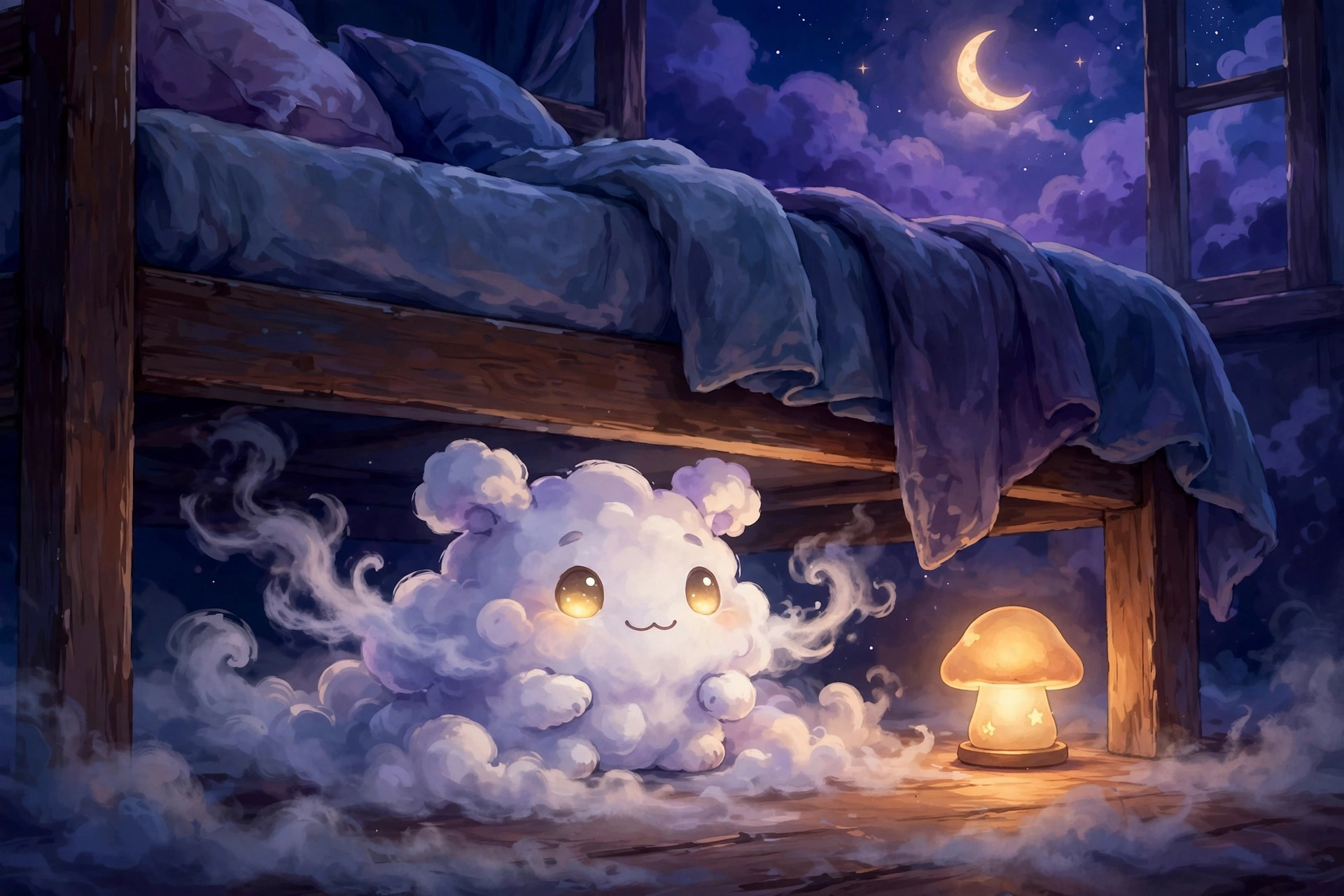
Why Children Dream About Monsters
- Monster dreams are a normal stage of childhood, most common between ages 3 and 6, and they usually fade as children learn to tell fantasy from reality.
- Monsters in dreams often stand in for big feelings: fear of the dark, anger they cannot express, jealousy over a new sibling, or nerves about starting school.
- At 2am, comfort first and problem-solving later: hold them, name what happened (“that was a scary dream”), and avoid dismissing it with “there is nothing there.”
- Daytime rituals help more than middle-of-the-night fixes: monster spray, a “brave” stuffed animal, and less scary media before bed all give kids tools they can actually use.
Kids' dreams are just one symbol. There are 49 more.
Get The 50 Most Common Dream Symbols, our free quick-reference guide that decodes every symbol in this dictionary in plain English.
Kids' dreams are just one symbol. There are 49 more.
The developmental story: why little kids dream about monsters
Between roughly ages 3 and 6, a child’s imagination goes into overdrive. They can picture whole worlds, invent invisible friends, and worry about things that do not exist. At the same time, their ability to sort fantasy from reality is still under construction.
That gap is where monsters live. A preschooler genuinely believes the scary thing under the bed could be real. Adults know it is a dream, but to the child who just woke up crying, the fear is completely real, and it deserves to be treated that way.
Monster dreams also arrive right on schedule with other childhood milestones. Toilet training, a new sibling, the first day of preschool, a move to a new house. Each of these shakes up a child’s sense of safety, and the dreaming mind turns that wobbly feeling into a shape: big teeth, loud roars, glowing eyes. The good news is that this phase usually eases as children get older and their reasoning catches up with their imagination, often noticeably by age 7 or 8.
What the monster might stand for
We cannot know exactly what your child’s monster means, and we would never claim to. But patterns come up again and again, and they are worth noticing.
Very often, the monster is a feeling wearing a costume. Anger is a common one. Children who are not allowed, or not yet able, to say “I am furious” might dream of something roaring and smashing. Fear works the same way, especially fear of the dark, fear of being alone, or fear of something specific like a loud dog in the neighborhood.
New situations can produce monster dreams too. Starting school, welcoming a baby sibling, or watching parents argue can all show up as a scary creature. The monster might suggest a child is processing something big during the day and their brain is still working on it at night. It is their mind’s way of rehearsing courage, not a sign that something is wrong.
When monsters reflect changes at home or school
Sometimes the timing tells the story. If monster nightmares cluster around a change, such as a new classroom, a new baby, a parent traveling for work, or even a move of the bedroom furniture, the dreams often reflect the child’s adjustment to that change.
This does not mean the change is harmful. Children need time to absorb new things, and dreams are one of the ways they do it. You might notice the nightmares fade once the new routine feels normal. That fade is itself a reassuring sign: the brain found a new equilibrium and the monster lost its job.
If school is the change underneath the dream, our guide to school anxiety dreams in kids looks at late-for-school dreams, scary teachers, and the hallway-lost feeling in more detail.
What parents can do: gentle strategies that actually help
The most powerful thing you can do costs nothing and takes a minute. When your child wakes up scared, start with comfort. Hold them. Say what happened out loud: “You had a scary dream.” Then wait. Problem-solving works far better in daylight than at 2am.
- Validate, don’t dismiss. “There are no monsters” may be true, but it tells a frightened child their feelings are wrong. Try: “That sounds really scary. I am right here.”
- Build a “brave” bedtime ritual. A spray bottle labeled “monster spray” (water with a drop of lavender), a special stuffed animal appointed as the bedtime guard, or checking the closet together with a flashlight all work because they give your child a feeling of control.
- Keep scary input low before bed. Even mild cartoons can plant images that bloom at midnight. Shift stimulating media earlier in the evening and keep the last 30 minutes calm: reading, drawing, or quiet talking.
- Practice brave-talk in daylight. When everyone is rested, talk through what the child could “tell” the monster. Rehearsing a response, even a silly one like “go away, you are not invited,” can make the next nightmare shorter or less frightening.
- Look at the day, not just the night. If nightmares spike, ask gently about the daytime: anything new, anyone unkind, anything changing? Sometimes a small daytime worry is the whole explanation.
One more note. If nightmares happen most nights for weeks and your child is exhausted, anxious during the day, or the dreams are severely distressing, it is worth mentioning to your pediatrician or a counselor. That is not an emergency, just a sign a professional’s perspective could help.
Common monster dream scenarios
- To dream of a monster under the bed: the classic. This often reflects a fear that is hard to name, especially fear of the dark or of being alone at night. A nightlight and a stuffed “guard” tend to help.
- To dream of a monster in the closet: similar to the under-the-bed monster, and it might suggest a worry the child senses but cannot quite see, like a change they overhear adults discussing.
- To dream of being chased by a monster: being chased is one of the most common dream themes at any age. For kids it could mean a feeling they want to run from: a scary part of the school day, a new rule, or even their own big anger.
- To dream of a monster in the house: the house often stands in for the child’s sense of safety. A monster inside might suggest something at home feels unsettled, even something small like a parent’s bad mood or a loud argument.
- To dream of fighting the monster: this is a good sign. It could mean your child is practicing courage and beginning to feel more powerful than the fear.
- To dream of befriending the monster: another encouraging one. It might suggest the child is making peace with a feeling, and the scary thing is becoming less scary.
- To dream the monster turns out to be friendly: a lovely twist. This often reflects a worry that dissolved, like being nervous about a new teacher who turned out to be kind.
Reassuring signs in monster dreams
- Good omen if the monster gets smaller or sillier: a shrinking monster might suggest the fear is losing its grip.
- Good omen if your child fights back or tells the monster to leave: standing up to the monster often reflects growing confidence.
- Good omen if a parent or friendly helper appears in the dream: it could mean your child feels protected and is internalizing that safety.
- Good omen if the monster becomes friendly: befriending the monster might suggest a big feeling is being integrated rather than fought.
- Good omen if the dreams fade after a routine settles in: when the new school or new sibling stops feeling new and the nightmares stop too, the brain has done its work.
Questions parents ask about children’s monster dreams
Are monster dreams normal for a 4 year old?
Yes, very. Monster dreams peak between about 3 and 6, right when imagination is powerful and the line between fantasy and reality is still blurry. Most children outgrow the intense phase as their reasoning develops.
My child wakes up screaming about a monster every night. Should I worry?
Frequent, intense nightmares that leave your child exhausted or anxious during the day deserve a conversation with your pediatrician. Occasional scary dreams, even vivid ones, are a normal part of childhood.
Should I tell my child monsters are not real?
Eventually, yes, and they will figure it out. In the moment of fear, though, comfort comes first. “I am here and you are safe” helps more at 2am than a logic lesson. Save the reassurance talk for daytime.
Does watching scary shows cause monster dreams?
It can contribute. Even mildly spooky content can plant images that resurface at night in young children. If nightmares spike, try moving all stimulating media earlier in the day and keeping evenings calm for a week or two.
What should I say when my child wakes up from a monster nightmare?
Keep it simple and warm: hold them, name it (“that was a scary dream”), and remind them they are safe now. Avoid grilling them about the dream’s details in the middle of the night. Morning is a better time to talk. Our guide on why kids get nightmares goes deeper on the nightmare side.
Can monster dreams mean something is wrong at school or home?
Sometimes the timing lines up with a change or worry, like a new classroom or a new sibling. That is usually adjustment, not a crisis. If the dreams cluster tightly around a specific daytime event, it is worth a gentle daytime conversation about how that event feels.
A few things to notice or ask
When your child mentions a monster dream, these gentle questions can open a useful conversation without turning it into an interrogation:
- “What did the monster look like? Was it big or small?” (size often shrinks as confidence grows)
- “Is there anything new or different happening that feels a little scary?” (asked in daylight, not at bedtime)
- “If you could say one thing to the monster, what would it be?” (their answer tells you how close they are to mastering the fear)
Monster dreams are one of the most common, and most misunderstood, parts of childhood sleep. They are usually a sign of a busy, growing imagination working through big feelings, not a warning of anything wrong. With a little comfort at night and a little courage-building by day, most kids walk right past the monster stage and barely remember it. If you want to look up more symbols your child mentions in their dreams, our free guide to the 50 most common dream symbols is a gentle place to start: dreamevaluator.com/free-dream-symbols-guide/
Related Dream Meanings
- Kids’ Dreams: A Parent’s Guide (our main guide to children’s dreams at every age)
- Dream Dictionary Hub (browse every symbol)
- Being Chased in a Dream (the adult version of the chase theme)
- Falling in Dreams (another common childhood theme)
- What Your Dreamer Type Reveals (a fun lens on your child’s dreaming style)
Go deeper
Go deeper
Leave a Reply