Recurring Nightmares: Why They Keep Happening and How to Stop Them
- A recurring nightmare is usually your brain returning to something unfinished: a stress it hasn’t resolved, a fear it hasn’t faced, or an emotion it hasn’t named.
- The repetition itself is the message. When the same dream plays on a loop, it often means the waking-life trigger is still active.
- Most recurring nightmares fade once the underlying pressure eases or gets addressed directly. They are rarely random.
- There are practical, well-known techniques for breaking the cycle, including rewriting the dream’s ending while you’re awake.
Nightmares are just one symbol. There are 49 more.
Get The 50 Most Common Dream Symbols, our free quick-reference guide that decodes every symbol in this dictionary in plain English.
Real dreams, fully interpreted: For a confrontation that arrives at home uninvited, see Dream Case Files #5, where the threat leaves behind an unanswered accusation instead of landing a blow.
One recurring pursuer readers report is the spider that will not stay in its corner: chased by a spider dreams.
Chase dreams are the most common recurring nightmare of all. Our guide to being chased in a dream covers what the pursuer usually stands for.
Real dreams, fully interpreted: For a threat dream staged on the body itself, see Dream Case Files #6, where a wire around the neck turns everyday pressure into a physical scene.
Nightmares are just one symbol. There are 49 more.
On this page
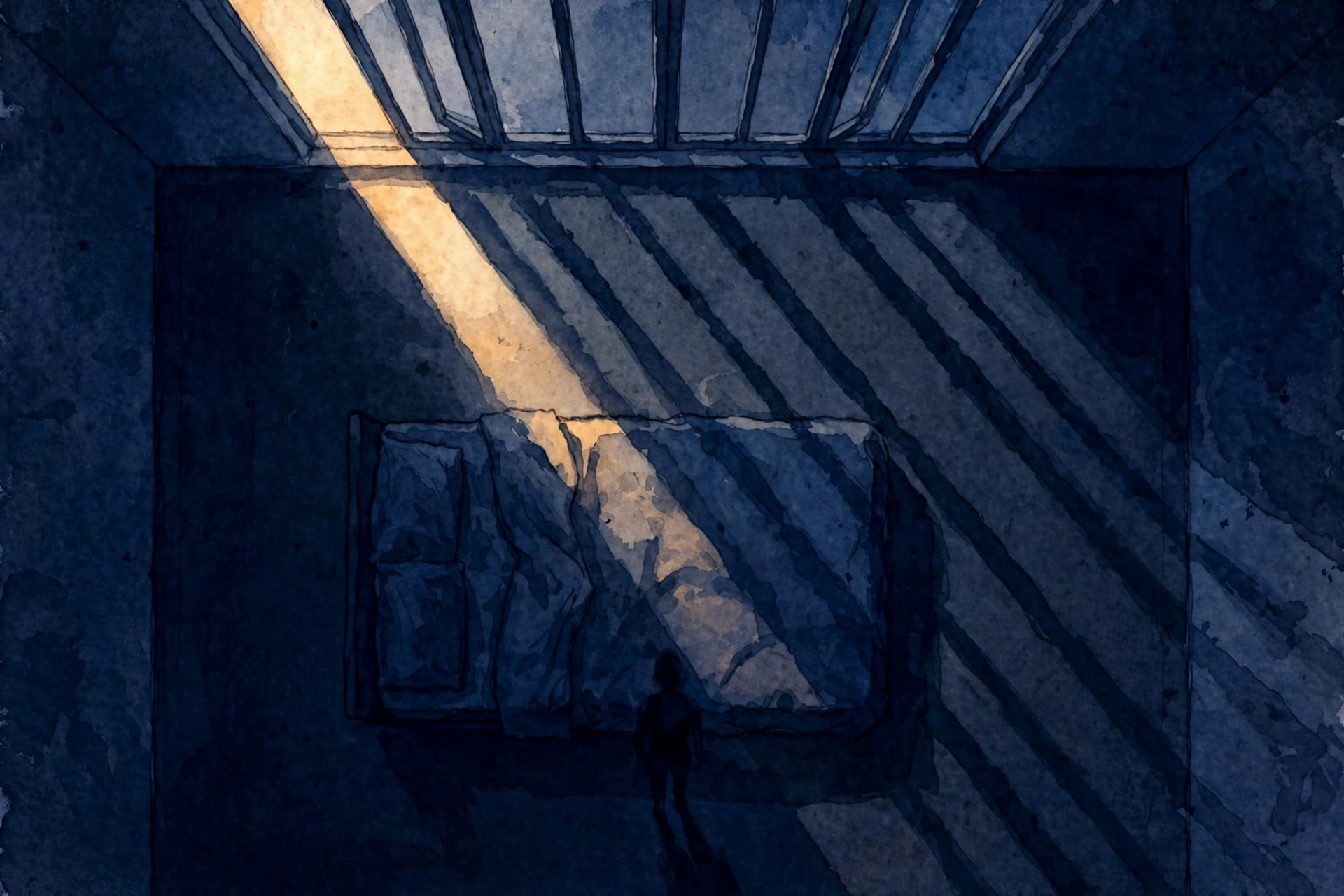
You know the exact moment it starts. The hallway looks wrong. The footsteps are too close. And you think, with a sinking familiarity, not this one again. Then you wake up, heart hammering, in a bedroom you recognize but can’t quite trust yet.
A nightmare once is unpleasant. The same nightmare five times is a pattern, and patterns deserve attention. Not panic. Attention.
Here’s the reassuring part first: recurring nightmares are common, they usually have an identifiable trigger, and they tend to stop when the trigger is dealt with. Let’s look at what’s likely going on.
What your brain may be doing
Sleep researchers describe dreaming as the brain’s overnight processing shift. During REM sleep, your mind replays emotional material from the day, files it, and tries to take the charge out of it. A nightmare is that process hitting something too hot to handle in one pass.
Think of it like a song stuck in your head, except the song is a feeling you haven’t dealt with. The brain keeps returning to the same imagery because the underlying emotion keeps returning in your waking life. The dream isn’t malfunctioning. It’s persistent.
Stress is the most common fuel. People report more nightmares, and more repeated ones, during periods of sustained pressure: a difficult stretch at work, money worries, relationship strain, grief. The dreaming mind grabs whatever imagery carries the feeling, being chased, falling, trapped, late, lost, and runs the same tape because the feeling hasn’t changed.
Sometimes the trigger is specific and recent: an argument you keep replaying, a medical scare, a move, a breakup. Sometimes it’s older and quieter, something you decided you were “over” while your nervous system disagreed. The nightmare doesn’t care about your verdict. It cares about what’s still unresolved.
Why the same nightmare repeats
Repetition in dreams usually tracks repetition in life. If the same worry greets you every morning, the same dream may greet you every night. The loop continues until something in the waking pattern shifts.
Avoidance plays a big role here. The things we refuse to think about during the day have a way of scheduling appointments at night. If you’ve been dodging a hard conversation, a decision, or a feeling, the nightmare may be the one place your mind is allowed to look at it. It repeats because the looking never finishes. You wake up before the resolution, every time.
There’s also a simpler mechanism: fear of the nightmare itself. Once a dream has scared you badly, going to sleep can start to feel risky. That bedtime anxiety raises your overall stress, which makes another nightmare more likely, which makes sleep scarier. It becomes a self-feeding loop. Breaking it often starts with the daytime, not the dream.
None of this means the nightmare is meaningless noise, and none of it means it’s a prophecy. It’s a signal. The question worth asking isn’t “what will happen to me” but “what in my life feels like this dream feels.”
Common recurring nightmare themes and what they could mean
The details matter, but certain scripts show up again and again. Here’s what each one often points to:
- Being chased, every time. The classic. It usually tracks something you’re avoiding in waking life: a confrontation, a deadline, a truth. The pursuer’s identity can help. A stranger often means a vague, unnamed pressure. Someone you know may point to a specific relationship. Our page on being chased in a nightmare goes deeper into this one.
- Falling, over and over. Falling dreams cluster around loss of control: a situation slipping, support disappearing, the ground shifting under a job or relationship. If the fall never lands, the anxiety may be about anticipation more than any actual outcome.
- Being trapped or unable to move. Often arrives during periods of feeling stuck or powerless. Sometimes it overlaps with the physical experience of sleep paralysis, where the mind wakes before the body. Terrifying, but not dangerous in itself.
- Losing someone, repeatedly. These often follow real loss or the fear of it: grief dreams, or anxiety about a loved one’s health. They can also surface during big separations, like a child leaving home or a relationship ending.
- Being unprepared: the exam, the stage, the missing clothes. The “late and unready” family of nightmares. They love to visit high achievers during performance pressure. The content is rarely literal. Nobody dreams of being naked in math class because of math class.
If your recurring nightmare doesn’t match any of these, the general nightmares guide covers more themes, and the recurring dreams guide looks at repetition that isn’t frightening.
When the nightmare is trying to help
It sounds strange to call a nightmare helpful. But consider what it’s doing: it’s refusing to let you ignore something. In that sense, a recurring nightmare is one of the more honest things your mind produces.
Some people find that their recurring nightmare changed or ended right after they finally addressed the waking-life issue. The difficult conversation happened. The decision got made. The grief got spoken aloud instead of carried silently. The dream, having delivered its message, retired.
There’s a useful reframe here. Instead of asking “how do I make this stop,” try asking “what is this asking me to look at.” The first question treats the dream as the problem. The second treats it as the messenger. Messengers stop coming once the message is received.
What actually helps break the cycle
You don’t have to wait for the underlying issue to resolve on its own. These approaches are widely used and worth trying:
Rewrite the ending while awake. This is the core of a technique called imagery rehearsal. During the day, when you’re calm, replay the nightmare in your mind but change the scary part. The pursuer gives up. You find a door. You turn and the chaser shrinks. Rehearse the new version for a few minutes daily. Many people find the dream starts following the new script within a week or two. It works because you’re giving your brain an alternative ending to file.
A short imagery rehearsal routine
Try this on a calm day, in plain steps. Write the nightmare in a few short lines, stopping before the worst moment if that feels easier. Then change one part of the ending so it becomes safer or more manageable. The pursuer gives up and walks away. A door opens. You call for help and someone answers. The new ending does not need to be cheerful. It needs to give your brain somewhere else to go.
- Read or picture the new version once a day for about 10 minutes, ideally when you are awake and settled.
- Rehearse it again briefly before sleep, then put the notebook away and keep the lights-out routine boring.
- Keep a short log: date, the old turning point, the new ending, and one line on how the night went.
After a week, the log matters more than any single night. Look for smaller changes first: waking later, feeling less rattled, or remembering a different ending. If the dream seems to belong to a broader repeat pattern, start with recurring dreams meaning, or use the Recurring Dream Diagnostic to sort the pattern before you rewrite it. Bring that log if you talk with a doctor or therapist about frequent or distressing nightmares.
Write it down, then write about your day. Keep a notebook by the bed. When the nightmare comes, jot down the dream, then jot down what’s weighing on you lately. Over a couple of weeks, the connection often becomes obvious. The act of writing also moves the material from the emotional brain to the thinking brain, which takes some of its power away.
Fix the sleep around the dream. Nightmares thrive on exhausted, irregular sleep. A consistent bedtime, less alcohol late at night, and a real wind-down routine won’t resolve the underlying issue, but they lower the volume. Think of it as turning down the amplifier the nightmare plays through.
Talk about it out loud. Tell someone you trust. Nightmares gain power from secrecy; they shrink when spoken. If the content touches trauma or grief that feels too big to carry alone, a therapist who works with dreams or trauma can help. That’s not an overreaction. It’s the right tool for a heavy job.
If nightmares are severely disrupting your sleep for weeks, or they follow a traumatic event, consider speaking with a sleep specialist or mental health professional. This article is for reflection, not diagnosis.
Frequently asked questions
What does it mean when you have the same nightmare over and over?
It usually means the same unresolved stress, fear, or emotion is still active in your waking life. The brain repeats the dream because the trigger repeats. When the underlying pressure eases or gets addressed, the nightmare typically fades.
Are recurring nightmares a warning about the future?
There’s no good reason to read them that way. Recurring nightmares reflect your inner state, not coming events. The “warning” they carry is about the present: something in your life right now needs attention.
Why do my recurring nightmares always wake me at the same moment?
The waking point is usually the peak of the dream’s emotional charge. Your brain hits the most intense moment and the arousal wakes you. It’s also why the dream never resolves: you always leave right before any ending could form.
Can children have recurring nightmares too?
Yes, and it’s very common, especially between ages 3 and 6. Kids’ recurring nightmares usually track developmental fears: separation, the dark, imagined monsters. Our guide to why kids get nightmares covers what helps at each age.
How long do recurring nightmares usually last?
It varies widely. Some run for a few weeks during a stressful period and vanish when it passes. Others persist for months or years when the underlying issue stays unaddressed. Actively working with the dream, rather than just enduring it, tends to shorten the run.
A gentler way to end the night
Tonight, if the dream comes again, try meeting it differently. Remind yourself, while you’re still half in it if you can, that you’ve survived this one before. It has never once followed you into the morning.
And tomorrow, in daylight, ask the question the nightmare keeps asking: what in my life feels like being chased, falling, or trapped? The answer is usually closer than you think. When you find it, the dream often does what it came to do, and leaves.
If nightmares keep visiting, our free guide to the 50 most common dream symbols can help you decode the imagery that shows up in yours. You’ll find it at dreamevaluator.com/free-dream-symbols-guide/.
Related Dream Meanings
- Nightmares: meaning, causes, and what to do
- Recurring dreams: why they repeat and what they’re asking
- Being chased in a nightmare: what your brain may be processing
- Why kids get nightmares (and how parents can help)
- Dream Oracle: pull a card on your recurring dream
- Dream dictionary hub: explore all dream meanings
Leave a Reply